
Sources for San Gabriel Previous Residents
Each source covers a different kind of past fact. Deeds show title parties. Directories and census schedules place people at an address for a publication or enumeration snapshot. Sanborn maps show buildings and street labels. Permits show dated work. Probate and newspapers can connect a person to kin or explain a transfer. The table makes those limits visible before a search begins.
| Source | Years it covers | Where held | What it shows |
|---|---|---|---|
| Recorded deed index | 1851-present | RR/CC Norwalk | Successive title parties and instrument identifiers |
| Assessor current roll | Current effective date shown by portal | LA County Assessor Portal | AIN, situs, characteristics, assessment clues |
| Local directories | Documented evidence 1920-2014; exact volumes unverified | Library and regional reference collections | Occupants or businesses at printed snapshots |
| San Gabriel Sanborn set | August 1925-August 1938, 20 sheets | LOC catalog and institutions | Footprint, use, construction, street labels |
| Building records | City evidence used for 1931-2011 records; current eTRAKiT | San Gabriel City | Permits, alterations, applicants, dates |
| Federal census | San Gabriel-relevant schedules through 1950 public | NARA and partner databases | Enumerated household and demographic fields |
| Probate and newspapers | Probate index 1983-present; newspaper span varies | LASC and LA County Library | Heirs, kin, death, residence, social events |
The exact directory shelf run, named criss-cross volumes, and a continuous obituary index were not published in the reviewed sources. Treat those as reference questions, not settled facts.
Begin with Today’s San Gabriel AIN
Start at the Los Angeles County Assessor Portal with the full situs address. Select the autocomplete result, note the AIN, copy the legal description, and record the assessment effective date. Open Map Search to confirm the parcel shape and street context. The AIN is the bridge from current parcel evidence to older documents, while the legal description can survive a street-number or name change.
The assessor card can show property type or use, year built, lot and building characteristics, values, exemptions, transfer references, and owner or assessee display where the current interface provides it. It does not identify every person who occupied the address. Save the parcel facts before searching the recorder so a same-name deed can be tested against land rather than accepted by guesswork.
- AIN
- The county assessor’s numeric parcel identifier.
- Situs
- The physical address used to locate the parcel.
- Legal description
- The tract, lot, block, or other land wording in the recorded instrument.
- Chain of title
- The sequence of recorded transfers and interests tied to the same parcel.
Walk San Gabriel’s Deed Chain at Norwalk
Los Angeles County’s RR/CC holds real-estate records from 1851-present. Its index is organized by grantor or grantee name and recording year, not street address, and the county does not place the index on the open Internet. Search the current owner or assessee clue as a grantee in likely years. Pull the candidate instrument, read the legal description, then record the seller as the next name to test backward.
- Carry the AIN, situs, legal description, likely current party, and likely year to the Norwalk review area.
- Search the person or entity as grantee, then compare the instrument’s legal description to the target parcel.
- Record the document number or book and page, recording date, instrument type, parties, and copy details.
- Search the seller as an earlier grantee and repeat the legal-description check.
- Stop or branch when a trust, entity, parcel split, or same-name conflict makes the chain uncertain.
A copy can show return or mailing details and transfer indicators, but an exact sale price is not guaranteed. The county says telephone index searches are not available. Use the RR/CC real-estate request page for copy orders, the recorder fee page for current charges, and the recorder FAQ for grantor, grantee, and year indexing. Counter access and focused copy requests are the documented channels.
San Gabriel Recorder’s 1958 Floor Split
San Gabriel previous residents research has a useful local access quirk. Records from 1851-1957 are reviewed in the Norwalk lower level, while 1958-present material is on the second floor. This is a physical organization of the index, not a fictional online cutoff. The full deed series is described as 1851-present, but the access method stays counter-based.
Plan the backward chain around the name-and-year structure. A street number alone cannot start the recorder search. When the old deed uses a tract, lot, block, or other legal description, retain that wording even if a modern map displays a different situs.
Former Owners and Occupants in San Gabriel
Ownership and occupancy are related but separate trails. A deed places a person or entity in a title event. A city directory places a listed person at a printed address. A census identifies an enumerated household. A permit names an applicant or contractor. An obituary may explain a death or kin relationship. The previous residents of an address can include people who never held title and owners who never lived there.
Compare the same year across sources. A directory entry with an “r” mark, a census household, and a deed party may tell three different stories. A mailing address that differs from the situs can point to correspondence rather than occupancy. No single record proves a complete list of household members.
San Gabriel Buildings in 1925-1938 Sanborn Sheets
The Library of Congress catalogs 20 San Gabriel Sanborn sheets spanning August 1925-August 1938 and marks the set as unavailable online from LOC. The sheets can stabilize an old address by showing building footprint, use, construction clues, and street labels. Their value is geographic and structural, not a name list.
Use the sheet with the deed’s legal description, a directory’s street number, a permit date, and the parcel map. If the footprint or street label does not fit, test a renumbering, tract change, boundary shift, or neighboring address before declaring that a household moved. The San Gabriel Sanborn catalog entry is the starting citation for a library or institutional request.
San Gabriel Permits Date Physical Change
San Gabriel eTRAKiT supplies address-keyed permit, project, parcel, license, contractor, and inspection modes. A record can show applied, issued, or final dates, status, work description, contractor, and inspection events. The city Archive Center can add older building, planning, commission, and meeting material. City Hall is at 425 S. Mission Drive, San Gabriel, and Building and Planning walk-ins run from 8 to 11:30 a.m.; afternoon visits require an appointment.
Permit dates help explain when a building changed, but an application date is not a move-in date. A named contractor is not necessarily a past household. Use permits to bracket a physical event, then look to directories, census, deeds, probate, and newspapers for people.
Pair San Gabriel Directories with Census Years
Library directories are often more frequent than a decennial census, but they are compiled and printed on their own schedule. Start from a known census household between 1900 and 1950, find the closest directory, and copy its entry. Then move one edition at a time. A first appearance narrows arrival; a last appearance can signal a move, death, omission, or a boundary change.
- Choose a known household and address from a census, deed, obituary, or family paper.
- Read the closest directory year and record every name, address, spouse, occupation, and abbreviation.
- Check the reverse section for the street and number, then confirm the alphabetical entry.
- Pair a gap with a deed, probate, newspaper, permit, voter source, or Sanborn sheet.
- Keep the legal description and parcel clue across any number or street change.
The historical shelf, exact volume check, and entry conventions are described on the San Gabriel city directory collections page.
Probate, Obituaries, and Federal Dockets
Probate and obituary records can end a past-household trail with kin evidence. LASC’s probate name index reaches 1983-present, while older cases may require Archives. Newspapers at LA County Library include local and regional titles, though the exact database span varies. Search a full name with a spouse, relative, street, business, church, school, or probate term.
A federal case is a separate jurisdiction. PACER can search federal party and case records by party, case number, court, and date. Use it when a deed, probate, or newspaper clue points beyond local court custody, and retain the case number rather than relying on a name hit.
The PACER federal court search provides the federal access path used for this portion of a San Gabriel address history.
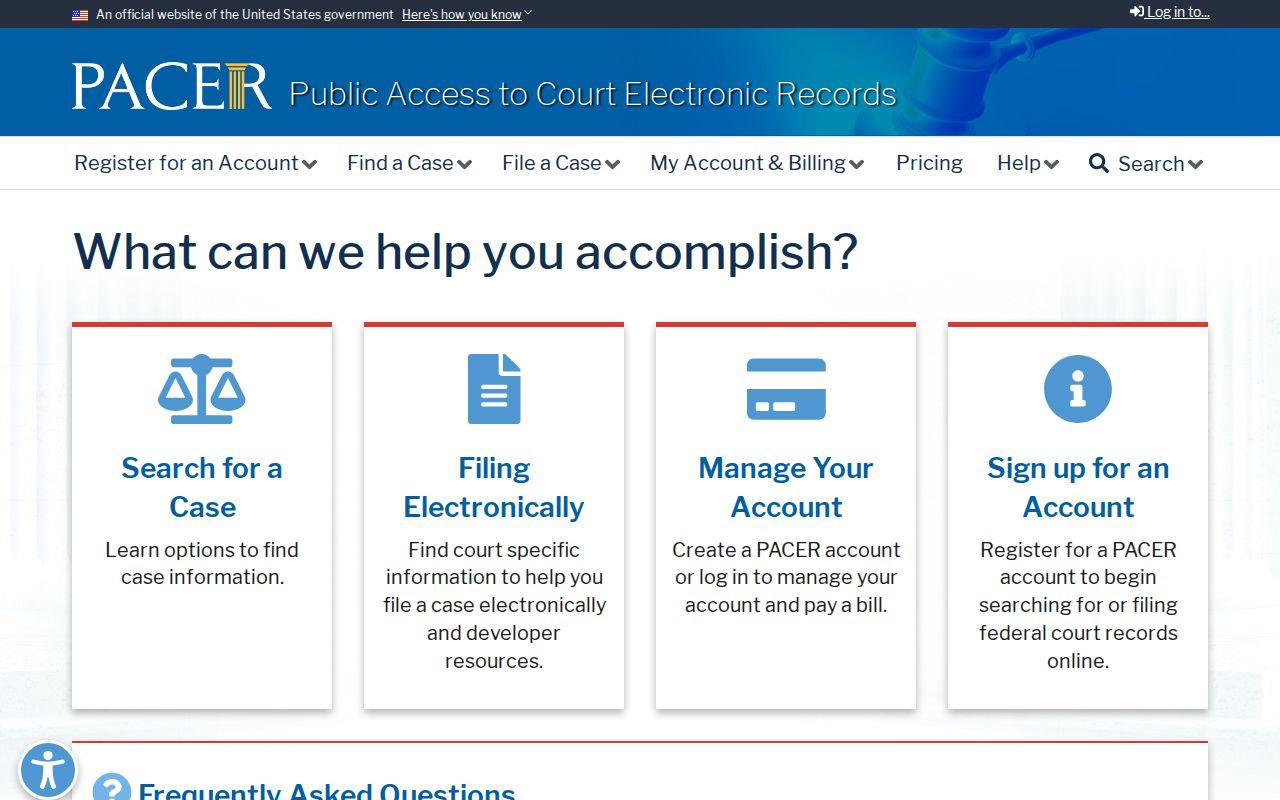
PACER is not a local resident directory. It is one possible endpoint when a past owner or heir appears in a federal case.
Bridge San Gabriel Address Changes
The reviewed official sources did not document a single citywide San Gabriel street-renumbering project or year. Do not invent one. Test a suspected change with the AIN, tract, lot, block, legal description, Sanborn sheets, subdivision maps, council minutes, deeds, and directory entries. A postal address, situs, and legal description are separate identities.
Carry the parcel rather than trusting the old number. San Gabriel’s incorporation in 1913 and twentieth-century subdivision growth mean a pre-city label may not match a modern jurisdiction. A Sanborn footprint can show continuity while a street label changes. A deed can preserve the land description while a directory reflects the printed address of its era.
A San Gabriel House History Follows Growth
San Gabriel’s source density grows with its history. Mission registers begin in 1771. County deeds begin in 1851. The city incorporated in 1913. The library history places the population near 2,000 in 1923, about 12,000 in 1940, and above 20,000 in 1950. Directories, subdivisions, Sanborn maps, permits, and newspapers become more useful as orchards and ranches give way to denser twentieth-century records.
A past-household story is strongest when it names the era, source, custodian, and limit. Use the prior owner trail for title, the directory or census for people, the map for place, and probate or obituary for kin. Keep lawful personal research separate from any attempt to expose a current household.
Privacy for San Gabriel Past-Household Research
Historical research does not remove present-day privacy limits. Safe at Home can place a substitute mailing address in many government transactions for eligible participants. Voter addresses and signatures, motor-vehicle data, sealed court records, adoption files, and confidential marriages remain restricted. A gap in a source should not be filled by guessing a protected location.
Lawful use. Deeds, maps, directories, census records, probate files, and obituaries may support family history and house history. Do not use any clue to stalk, harass, intimidate, or harm a person.
When a record is wrong, contact the office that created it. A directory cannot correct a deed, a court index, a vital certificate, or a city archive entry. The best previous residents research is transparent about what is known, what is inferred, and what remains unverified.